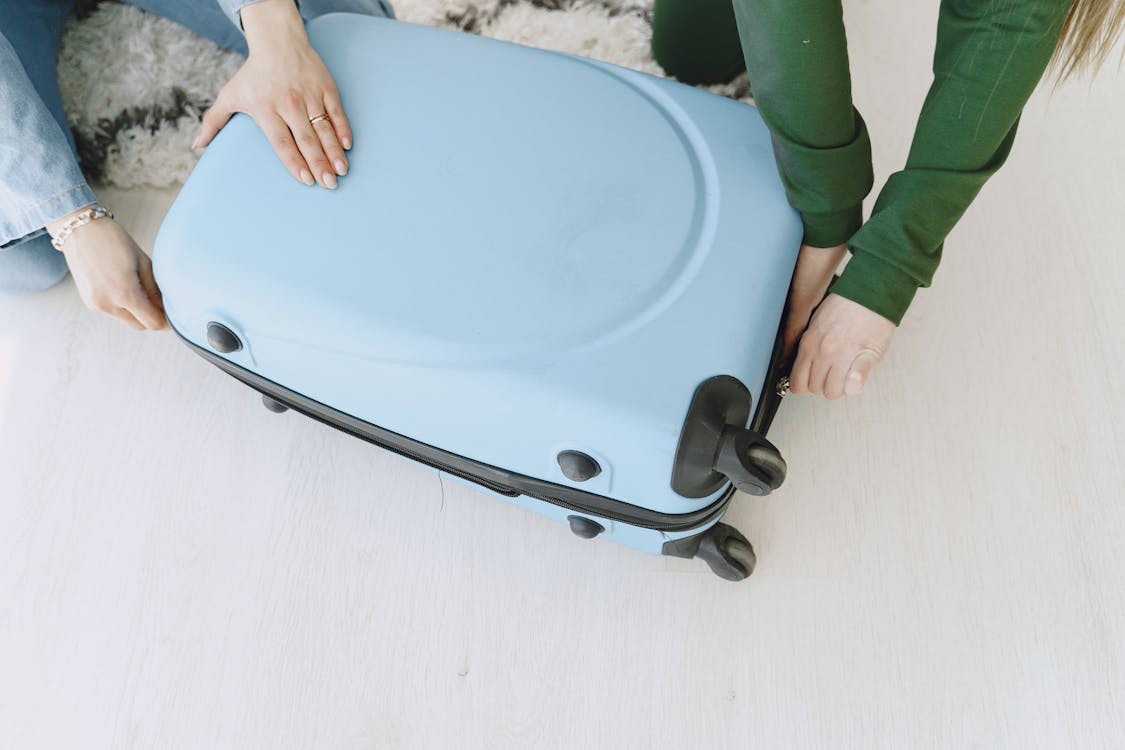
The Complete Guide to Flying Hand Luggage Only in 2026
Travelling with only a cabin bag saves money, eliminates baggage wait times, and makes every trip faster. Here is exactly how to pack for up to a week in hand luggage only — including what each major budget airline actually allows.
Table of Contents
Flying with hand luggage only is the single most effective way to reduce the cost of a budget airline flight. On Ryanair, easyJet, or Wizz Air, a return checked bag costs anywhere from €20 to €80 depending on the route and how late you add it. That is often more than the base fare itself.
Beyond the cost, hand luggage travel eliminates a category of airport friction: no check-in queue, no bag drop, no 20-minute wait at the carousel, no risk of the airline losing your bag. You land and leave.
Here is how to do it properly.
What each airline allows for free
The rules differ meaningfully between carriers, and the sizes are strictly enforced on some routes.
Ryanair
Free: one personal item, 40×20×25 cm (must fit under the seat). This is very small — essentially a small backpack, handbag, or laptop bag.
Overhead cabin bag: not included free. Requires Priority boarding (€5–€24 each way) or the 2 Cabin Bags bundle. Without this, your cabin bag will be gate-checked if overhead bins fill up.
easyJet
Free: one cabin bag, 45×36×20 cm, under the seat. This is the size of a large daypack — small enough for a weekend trip if you pack carefully.
Overhead bag (56×45×25 cm, up to ~23 litres): requires a fare upgrade or add-on. On most routes, this is a meaningful size for a week's travel.
Wizz Air
Free: one small cabin bag, 40×30×20 cm, under the seat. This is extremely restrictive — smaller than Ryanair's free allowance. A standard 20L daypack will not fit.
Overhead cabin bag: fee required (€16–€42 each way), which partly explains why Wizz Air's base fares look so low.
KLM / Transavia
Both allow a free cabin bag up to 55×35×25 cm in the overhead bin — a significantly more generous allowance. For hand-luggage-only travel, KLM and Transavia are materially more flexible.
Choosing the right bag
The single most important decision is bag size. Buy a bag designed for the airline you fly most, not a generic "carry-on."
For Ryanair frequent flyers: the Cabin Max Metz (40×20×25 cm) is the most popular purpose-built option and fits the underseat gauge exactly. Do not bring a bag and hope it fits — gate staff measure.
For easyJet and most other carriers: a 35–40L bag works well. Osprey Farpoint 40, Nomatic Travel Pack, and similar bags are popular because they compress and are soft-sided (easier to force into overhead bins).
Avoid hard-shell suitcases for hand luggage only — they are difficult to compress and are frequently gate-checked when bins fill up on busy routes.
Packing for a week in hand luggage
It is possible but requires discipline. The framework that works:
Clothing: 3–4 tops, 2 bottoms, 1 lightweight layer, merino wool socks and underwear (merino dries fast and resists odour, so one pair handles multiple days). Roll clothing rather than fold — significantly more space-efficient.
Toiletries: liquids under 100ml in a clear bag. Solid alternatives — shampoo bars, solid deodorant, toothpaste tablets — save both weight and liquid allowance.
Shoes: wear your heaviest pair on the plane. Pack at most one additional lightweight pair, ideally sandals or fold-flat flats.
Jacket: wear it on the plane. If it does not fit in the bag, wearing it is always allowed.
The items people most commonly fail on: too many "just in case" items, full-size toiletries, and heavy shoes. Eliminate these and a week fits in a 35L bag.
Gate checking: what to know
On busy routes, even passengers with valid overhead cabin bags may be asked to gate-check at no charge. This is different from charging you for a bag — the airline does it to manage limited overhead space. Your bag goes in the hold and is returned at the jet bridge on arrival (not the carousel).
On Ryanair, gate checking happens most frequently on popular leisure routes in summer. If you have medication, electronics, or valuables, remove them before handing over the bag.
When hand luggage only does not work
Some trips genuinely require a checked bag: longer trips where laundry is not practical, trips requiring formal clothing, trips with equipment (hiking, ski, scuba). In these cases, book the checked bag online at the time of purchase — fees are lowest then and increase significantly if added later or at the airport.
The cut-off for cost-effectiveness is roughly a week. Beyond that, or for trips with specific gear, the checked bag fee is often justified.
The financial case
A return trip with an added cabin bag (overhead) on a budget airline costs roughly €20–€40 extra return. A checked bag is €20–€80 extra return. For a traveller taking six short trips per year, the cost of consistently checking a bag ranges from €120 to €480 annually.
Investing €80–€120 in a purpose-built hand luggage bag pays for itself within two or three trips. The packing discipline has a one-time learning curve; after that it becomes automatic.
FairFares
Stop checking prices.
Start getting alerted.
We scan 3,570 routes multiple times daily. When a price genuinely drops below its historical average, you get an alert — before the deal disappears.
Free plan available · No credit card needed · No markup, ever
Share this article
By FairFares Team · Powered by ARAI

Are Last-Minute Flights Actually Cheaper? The Honest Answer
The idea that airlines slash prices at the last minute to fill empty seats is one of travel's most persistent myths. Here is what actually happens to flight prices in the final days before departure — and when last-minute deals genuinely exist.
29 June 2026
Ryanair vs easyJet vs Wizz Air: Who Is Actually Cheaper?
Comparing Europe's three biggest budget carriers purely on headline price misses the point. Once you add bags, seat selection, and check-in fees, the cheapest ticket often becomes the most expensive. Here is how to compare them properly.
29 June 2026

How to Claim EU Flight Compensation — EC 261/2004 Explained
EU law gives air passengers some of the strongest rights in the world. If your flight was delayed more than 3 hours, cancelled without notice, or you were denied boarding, you may be entitled to up to €600 in cash compensation. Here is how the regulation actually works and how to claim it.
29 June 2026
Find deals on routes you actually fly
FairFares monitors 3,570+ routes from 50+ European airports. Set your home airport, get alerted when prices genuinely drop. No markup.
Free plan available. No credit card needed.